Spring Training & Sunshine: The Ultimate Baseball Fan Road Trip Through Florida & Arizona

Every February and March, something magical happens across the American South and Southwest. The crack of the bat echoes through palm-lined ballparks, fans wear fresh jerseys under warm sunshine, and baseball returns after the long winter. This is Spring Training, one of the most beloved traditions in the sport — where hope begins again for all 30 teams of Major League Baseball.

For fans, Spring Training is more than preseason baseball. It’s a chance to get closer to the game — literally. Players sign autographs along foul lines, prospects fight for roster spots, and families relax under cloudless skies while watching tomorrow’s stars. Best of all, the stadiums are clustered together, making them perfect for an unforgettable road trip.

Two regions host this annual baseball migration:

  • Florida’s Grapefruit League
  • Arizona’s Cactus League

Both offer warm weather, beautiful ballparks, and dozens of teams playing daily games. But each region delivers its own flavor of baseball adventure.

So pack the sunglasses, load up your playlist, and hit the highway. This is the ultimate baseball fan road trip through Florida and Arizona.


The Florida Grapefruit League: Baseball Beneath the Palms

For over a century, Florida has welcomed teams escaping cold northern winters. Today, the Grapefruit League stretches across central and south Florida, with teams playing in picturesque stadiums surrounded by palm trees, beaches, and tropical breezes.

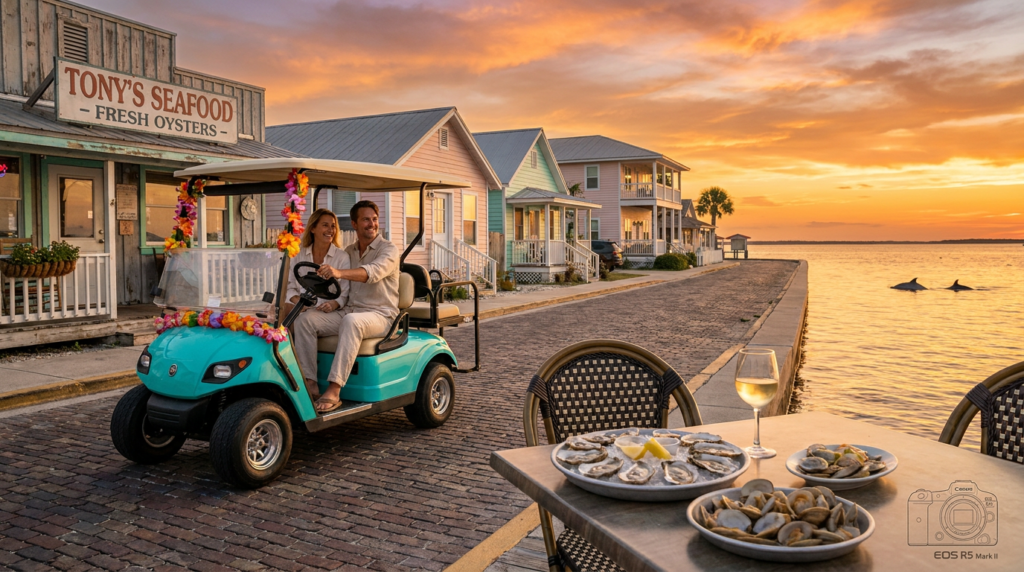
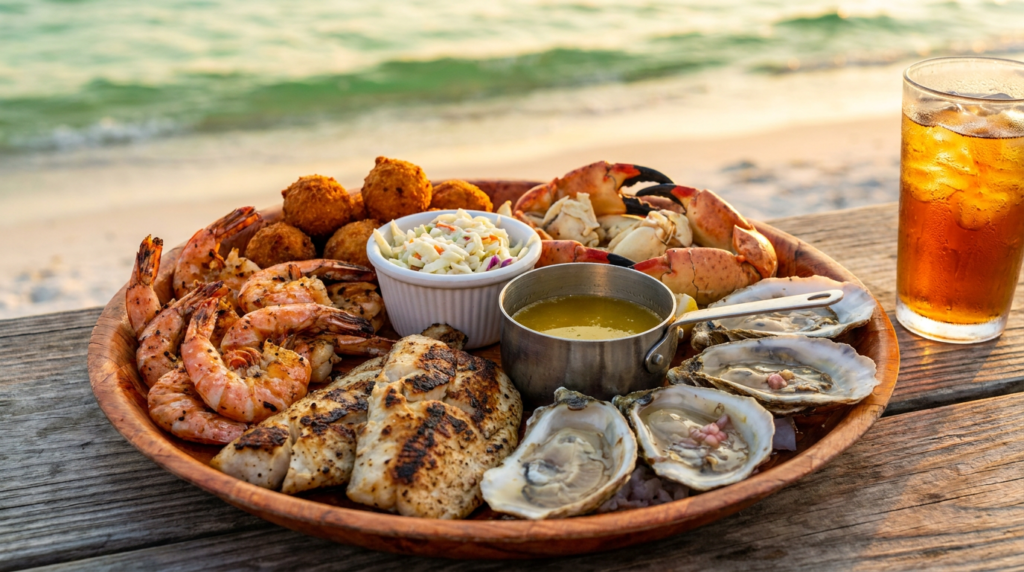
One of the biggest draws is proximity to the coast. Fans can watch a game in the afternoon and have seafood by the ocean that evening.

As baseball legend Yogi Berra once joked:

Love is the most important thing in the world, but baseball is pretty good too.”

In Florida during Spring Training, you get both — love for the game and a vacation atmosphere.


Road Trip Stops: Grapefruit League Highlights

https://www.visitfortmyers.com/sites/default/files/2022-01/BaseballSpringTrainingBostonRedSoxJetBlueParkFenwaySouthPanoramic_FortMyers_rebbewe_2021_03.jpg

1. Fort Myers – Red Sox Nation South

Start your trip in Fort Myers at JetBlue Park, the spring home of the Boston Red Sox. Known as “Fenway South,” the park replicates many features of Fenway Parkincluding a mini Green Monster.

Expect huge crowds, passionate fans, and plenty of New England accents.

Nearby perks:

  • Gulf Coast beaches
  • Fresh seafood shacks
  • Sunset views on Sanibel Island

2. Lakeland – Old School Baseball

Drive north to Lakeland, home of Publix Field at Joker Marchant Stadium, where the Detroit Tigers have trained since 1934.

It’s the longest-standing Spring Training partnership in baseball, giving the stadium a nostalgic, throwback feel.

Road trip bonus: Lakeland sits right between Orlando and Tampa, making it easy to pair baseball with theme parks or breweries.


3. Jupiter – Double the Teams

Next stop: Jupiter, Florida.

At Roger Dean Chevrolet Stadium, fans can watch both the Miami Marlins and St. Louis Cardinals train and play.

This stadium creates a festival-like environment with constant games and enthusiastic Midwest fans who escape winter each year.


4. Port St. Lucie – Mets Territory

End your Florida tour at Port St. Lucie and Clover Park, the spring home of the New York Mets.

Mets fans turn this town into a mini Queens every spring.

Expect:

  • Loud chants
  • Lots of blue and orange
  • Some of the best ballpark hot dogs anywhere

5. Tampa – Yankees Tradition on the Gulf Coast

Continue your Spring Training adventure in Tampa at George M. Steinbrenner Field, the spring home of the legendary New York Yankees.

Often called the largest Spring Training stadium in baseball, Steinbrenner Field mirrors many features of Yankee Stadium, giving fans a big-league feel even in the relaxed atmosphere of March baseball. Yankees fans travel from across the country to watch their team tune up for the season, creating one of the most electric Spring Training crowds anywhere.

But the experience doesn’t stop when the final out is recorded.

Tampa offers plenty of ways to extend the day:

  • Stroll along the scenic Tampa Riverwalk
  • Explore restaurants and nightlife in Ybor City
  • Catch sunset views along Tampa Bay
  • Visit the Tampa Bay History Center

For baseball fans, this stop feels like the centerpiece of the Grapefruit League, with multiple nearby stadiums just a short drive away.


6. Bradenton – Pirates Baseball by the River

About 45 minutes south of Tampa, the road trip continues to Bradenton, Florida, where the Pittsburgh Pirates train at LECOM Park.

LECOM Park is one of the oldest and most charming ballparks in Spring Training, originally built in 1923. With classic architecture, intimate seating, and a retro feel, it’s a favorite among baseball purists who appreciate the sport’s history.

The ballpark even features a replica Clemente Wall, honoring Pirates legend Roberto Clemente.

After the game, Bradenton offers a laid-back Florida vibe:

  • Walk the Bradenton Riverwalk along the Manatee River
  • Explore the artsy village shops of Anna Maria Island
  • Enjoy fresh Gulf seafood at waterfront restaurants
  • Catch sunset views along the coast

Bradenton is also conveniently located between Tampa and Sarasota, making it a perfect stop on a Gulf Coast baseball loop.


7. Sarasota – White Sox & Gulf Coast Paradise

Just 20 minutes south of Bradenton lies Sarasota, Florida, where the Chicago White Sox hold Spring Training at Camelback Ranch? Wait — correction: White Sox train at Camelback Ranch in Arizona? No — in Florida they train at Ed Smith Stadium.

Correct entity:

Ed Smith Stadium

This beautifully restored stadium blends classic Florida architecture with modern amenities and offers one of the most comfortable viewing experiences in the Grapefruit League.

White Sox fans — especially those escaping Chicago winters — quickly discover that Sarasota might be the ultimate post-game destination in Spring Training.

After a game, head out to explore:

  • Siesta Key Beach, famous for its powder-white quartz sand
  • The elegant boutiques and restaurants of St. Armands Circle
  • The fascinating art and circus history at the John & Mable Ringling Museum of Art
  • Waterfront dining and sunset views along Sarasota Bay

With Tampa (Yankees), Bradenton (Pirates), and Sarasota (White Sox) all within about an hour’s drive, fans can easily catch multiple games across three cities in just a couple of days.

It’s one of the most convenient and beautiful stretches of Spring Training anywhere — a baseball road trip wrapped in sunshine, Gulf breezes, and unforgettable ballparks.


Florida Fan Experience

Spring Training in Florida moves at a relaxed pace. Stadiums are spread across the state, meaning drives between games can be scenic mini-adventures.

Along the way you’ll discover:

  • Orange groves
  • Beach towns
  • Spring-fed rivers
  • Seafood restaurants

One fan summed it up perfectly:

Spring Training is baseball the way it used to be — sunshine, small stadiums, and the smell of fresh grass.”


Arizona’s Cactus League: Baseball in the Desert

While Florida offers beaches, Arizona delivers dramatic desert landscapes and tightly packed stadiums.

The Cactus League is centered around Phoenix and surrounding cities like Scottsdale, Mesa, and Glendale.

The biggest advantage?

All stadiums are within about an hour’s drive.

This means diehard fans can sometimes catch two or even three games in one day.

As Hall of Fame pitcher Sandy Koufax once said:

Pitching is the art of instilling fear.”

Spring Training lets fans see that art up close — often from just a few feet away.

» Read more

Desert Bloom Magic: Why March Is the Perfect Time to Explore Arizona’s Wildflower Trails

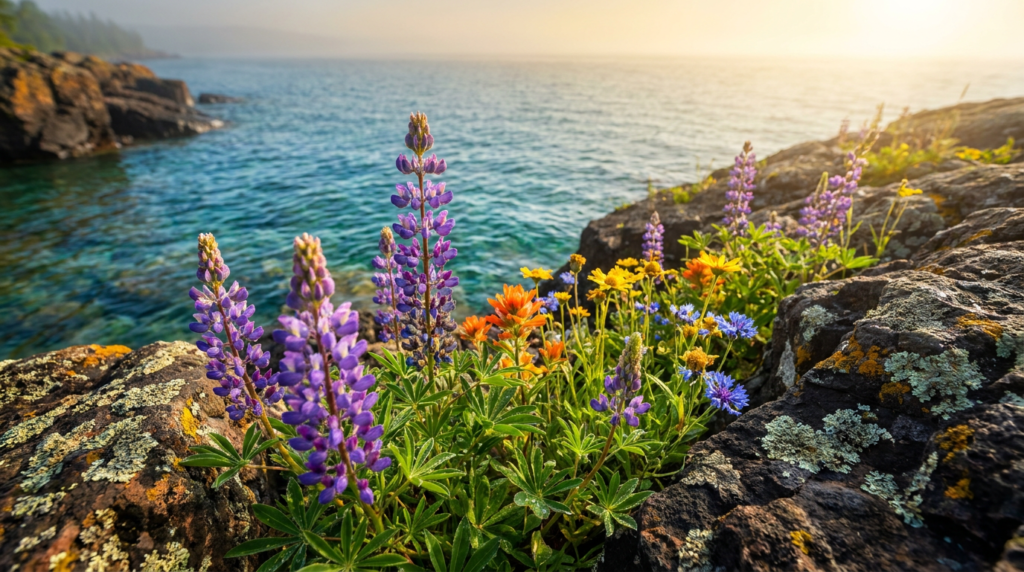
The desert has a reputation for being stark, rugged, and even a little unforgiving. But every spring—almost like a secret the land keeps all winter—Arizona’s deserts burst into color. In March, landscapes that looked quiet and dusty just weeks before suddenly glow with blankets of orange poppies, purple lupines, golden brittlebush, and delicate white primrose.

It’s one of the most spectacular seasonal transformations in America. Travelers who time it right discover that Arizona’s wildflower season turns the desert into a living painting—one that stretches across mountains, valleys, and winding trails.

March sits right in the sweet spot of this transformation. Winter rains soak the soil just enough, temperatures warm comfortably, and daylight stretches longer across the Sonoran Desert. The result? Hillsides erupt with color, and hikers, photographers, and road-trippers arrive to witness what locals simply call “desert bloom magic.”

As naturalist John Muir once wrote:

“In every walk with nature one receives far more than he seeks.”

And in Arizona during March, what you receive is unforgettable.


The Science Behind Arizona’s Wildflower Explosion

Wildflowers in the desert don’t bloom every year with the same intensity. Their appearance depends heavily on winter rainfall, temperature patterns, and soil conditions.

When the conditions align—particularly after wet winter storms—the desert floor comes alive with seeds that may have been dormant for years.

Botanists refer to this as “desert seed banking.” Many wildflower species can wait patiently underground for the perfect conditions before germinating. Once rain arrives, they grow quickly, bloom brightly, and complete their life cycle before the desert heat returns.

March is often peak bloom because:

  • Winter rains have soaked into the soil
  • Temperatures stay between 65–80°F—ideal for hiking
  • Days are sunny but not yet scorching
  • Many species bloom simultaneously

The result is a short but breathtaking window of color across Arizona’s wild landscapes.


Where the Desert Comes Alive: Arizona’s Most Stunning Wildflower Trails

Picacho Peak State Park

https://images.openai.com/static-rsc-3/e53knrGtXk_X1ZWBe6va8bRTY44NFJPki_lLW5VdVW7LLfAgpf2aC_JjDFs1OnpeZDqrvhqZNcOxn64-RbWfCwcm9K9EBggs0ARNcZtxgiw?purpose=fullsize&v=1

Located halfway between Phoenix and Tucson, Picacho Peak State Park might be Arizona’s most famous wildflower destination.

The towering volcanic peak rises dramatically from the desert floor, and during March its surrounding fields often explode with bright orange Mexican gold poppies.

Visitors hike trails that weave through colorful fields while the jagged mountain dominates the skyline.

Popular trails include:

  • Hunter Trail – challenging climb with cables and panoramic views
  • Sunset Vista Trail – gentler route through dense flower fields
  • Calloway Trail – great for photography

On exceptional bloom years, the hillsides look almost as if someone spilled paint across the desert.


Lost Dutchman State Park

https://images.openai.com/static-rsc-3/a82EjTj06d6salok9vxhyD5MCPvlnsk97Xv3H4rBnRHpvW2Kum8LWOxGWftYLDIn3ONdFlgx86qrgbComL7zHwCBKT52EO_rn-2tNhkaJyg?purpose=fullsize&v=1

Just east of Phoenix sits Lost Dutchman State Park, named after the legendary gold mine said to be hidden somewhere in the rugged Superstition Mountains.

March brings waves of:

  • Desert lupine
  • Mexican poppies
  • Purple owl clover
  • Brittlebush

The Siphon Draw Trail becomes one of Arizona’s most photogenic hikes as flowers frame the towering Superstition peaks.

Sunrise and sunset hikes are especially magical here. The mountains glow deep orange while flowers light up the desert floor.


Catalina State Park

https://images.openai.com/static-rsc-3/kUxUn-naNJpojd10jFelds59Rqr-Cx2O7oWkp0F9zxH2efUDw5aS0tAxXybpRf8Ek7EFFa_FmAhAAOTM2sQjcY5TKWcUtTc5EShdhZQWQyg?purpose=fullsize&v=1

At the base of the Santa Catalina Mountains near Tucson, Catalina State Park offers some of the most accessible wildflower hikes in southern Arizona.

Here, the desert becomes a stunning mix of towering saguaros and vibrant flowers.

Trails wind through rolling desert grasslands and cactus forests filled with blooming:

  • Desert marigolds
  • Penstemon
  • Lupine
  • Fairy duster

It’s also one of the best places to see hummingbirds darting between flowers.

Visitors often say Catalina State Park feels like walking through a desert botanical garden designed by nature itself.


Saguaro National Park

https://images.openai.com/static-rsc-3/Ix5vGYLZW8k12qZO2huW3UYvVoQlU1A5xuBQtKu6Qjy1NNK3pgJyZXUbOY7qR3hsUavUKFNliSvOGge-I5G-vXidKUDSqKXKr-mqegQDQ_A?purpose=fullsize&v=1

Few landscapes symbolize the American Southwest like Saguaro National Park.

And during March, the park’s iconic cactus forests are surrounded by carpets of desert flowers.

The contrast is breathtaking:

  • Giant saguaros towering overhead
  • Golden wildflowers spreading across the desert floor
  • Purple and pink blossoms dotting the landscape

The Valley View Overlook Trail is a short hike with sweeping views that become even more spectacular when the bloom is strong.

Photographers especially love this park during golden hour when the flowers glow against the desert sunset.


Organ Pipe Cactus National Monument

https://images.openai.com/static-rsc-3/txiQBNtojXuqx1_TRUUyV7fpPREPY6w_FrFEyiN06iGJ4sveTIj8wo2Fkg9JkQ0aNDv1mltMlu76FpO_ZqYe4ifDY90LKKiILToC9ntarm4?purpose=fullsize&v=1

Farther south near the Mexican border lies one of Arizona’s most underrated natural treasures: Organ Pipe Cactus National Monument.

This UNESCO biosphere reserve hosts one of the richest ecosystems in the Sonoran Desert.

March reveals a tapestry of wildflowers stretching across desert plains and rocky slopes.

Expect to see:

  • Desert sunflowers
  • Purple lupine
  • Globe mallow
  • Sand verbena

The Ajo Mountain Drive scenic route becomes an unforgettable wildflower drive through the desert.

For travelers seeking solitude and vast open landscapes, this area feels wonderfully untouched.


Arizona’s Most Common Spring Wildflowers

https://images.openai.com/static-rsc-3/yDGz4KoqDg5vxvVrJzVKEIBibeYFYs2jMKwo3IcvlhbjsIfxRl-0WAZ5AQMyVSKZz4XCG6q3SlkIum5SxxG3-kOruRm8v21Fz7IoILk5QIo?purpose=fullsize&v=1

While hundreds of species bloom each year, a few iconic flowers dominate Arizona’s spring displays.

Mexican Gold Poppy
Bright orange petals that form glowing carpets across desert hillsides.

Desert Lupine
Tall purple spikes that add contrast to fields of poppies.

Brittlebush
Cheerful yellow blooms often covering entire slopes.

Evening Primrose
Delicate white blossoms that open at dusk.

These flowers thrive in tough desert conditions, growing quickly before temperatures soar into summer heat.


When Exactly Is Peak Bloom?

Peak bloom varies each year depending on rainfall, but mid-March to early April is typically the best window.

Here’s a general bloom timeline:

Month What You’ll See
Late February Early desert marigolds and primrose
March Peak poppies, lupine, and brittlebush
Early April Higher elevation blooms begin
Late April Mountain wildflowers take over

Travelers often monitor Arizona wildflower reports before visiting since the bloom shifts depending on winter weather.


Tips for Planning Your Wildflower Adventure

Wildflower season draws visitors from across the country, so planning ahead makes the experience smoother.

Go Early in the Day

Morning light is best for photography, and trails are cooler and quieter.

Bring Plenty of Water

Even in March, desert hikes can warm up quickly.

Stay on the Trail

Protect fragile wildflowers by avoiding stepping into bloom fields.

Check Bloom Reports

Arizona State Parks and local visitor centers often post weekly updates.

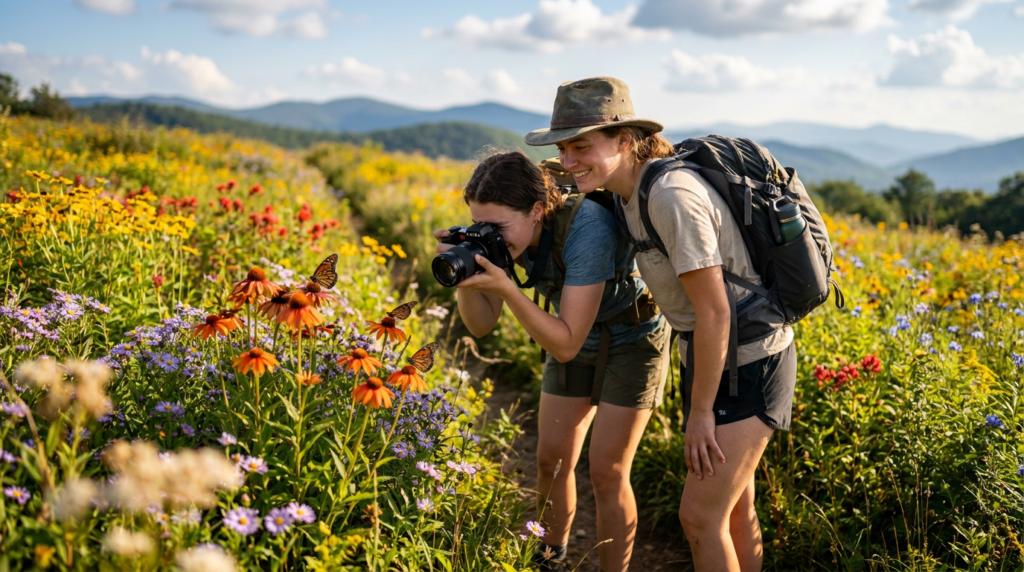
Bring a Camera

March blooms create some of the most photogenic landscapes in the Southwest.


Wildflower Photography Tips

https://petapixel.com/assets/uploads/2026/02/Photographers-Guide-to-Capturing-the-Superbloom-of-the-American-West-by-Kate-Garibaldi-Three-Panel-PetaPixel-BG.jpg
https://images.openai.com/static-rsc-3/-B88BYsrK28jC0m9lopgx8QTjHA2859uZZ6Lv0k2ajX2WgVoEfX2M9oanv6xMCw43J4i7nuF3nZaXTFKH3prtzT9SZ0xIKDDTpYeDp_dOZA?purpose=fullsize&v=1
https://images.openai.com/static-rsc-3/v_om4qNX2vLMjD3puVoefWZsyMYbD4aO5PtjpevxmYqT5AmbeJO63zYs-ibcp1aWerI7EALeU-f_V1fN6FnhJMAe27hjLa7ZYPsPYD0Oklc?purpose=fullsize&v=1

Photographing desert blooms can produce stunning results with just a few simple techniques.

Shoot during golden hour
Sunrise and sunset create warm lighting that makes flowers glow.

Get low
Position your camera near the flowers to frame mountains behind them.

Use contrast
Combine bright blooms with saguaros or rocky cliffs.

Try macro photography
Close-ups reveal intricate details most hikers overlook.

As photographer Ansel Adams once said:

“You don’t take a photograph, you make it.”

Arizona’s spring bloom provides the perfect canvas.


Why March Is the Sweet Spot for Arizona Travel

Beyond the flowers themselves, March is simply one of the best months to explore Arizona.

Temperatures remain comfortable, making outdoor adventures enjoyable across the state.

Visitors can combine wildflower hikes with:

  • Desert scenic drives
  • National park visits
  • Arizona wine country tours
  • Tucson and Phoenix culinary scenes
  • Spring training baseball games

It’s a season when the desert feels vibrant and alive.


The Magic That Keeps Travelers Coming Back

The desert may seem quiet at first glance, but those who visit in March discover a landscape filled with color, life, and surprise.

Wildflowers transform Arizona into something almost surreal—fields of orange and purple stretching across golden desert valleys while towering cacti stand guard overhead.

And because the bloom changes every year, no two seasons are ever quite the same.

Some years produce scattered flowers. Others create legendary “super blooms” that turn entire valleys into carpets of color.

Either way, the magic of Arizona’s wildflower trails reminds travelers that even the harshest landscapes can burst with life when the timing is right.

So if you’re planning your next spring getaway, pack your hiking shoes, grab a camera, and head toward the Sonoran Desert.

Because in March, Arizona doesn’t just bloom.

It dazzles. 🌵🌼

Skip Spring Break: February Destinations That Feel Like a Private Escape

February gets a bad rap. It’s wedged between the sparkle of the holidays and the anticipation of spring. The weather is unpredictable. The daylight still feels short. And yet — it might just be the most underrated travel month of the year.

While crowds flock to March’s Spring Break hotspots, February sits quietly in the corner, offering something far more luxurious: space. Space to breathe. Space to wander. Space to experience a place without elbowing your way through it.

As travel journalist Pico Iyer once said, “We travel, initially, to lose ourselves; and we travel, next, to find ourselves.” February might be the perfect month to do both — especially if you’re looking for destinations that feel like your own private retreat.

If you’ve ever dreamed of standing alone on a windswept beach, wandering a historic street without tour groups, or watching snow fall in complete silence — this is your month.

Let’s skip Spring Break — and claim February.


1. Sedona – Desert Silence & Red Rock Solitude

https://solstis.tours/cdn-cgi/imagedelivery/VzYWRpJYIXLVGwr8vjyQnA/4acdc23a-e307-4970-744e-14447ce1f900/public

February in Sedona feels almost secret.

The red rocks glow deeper in winter light. The air is crisp but comfortable — typically in the 50s and 60s. And the hiking trails that become shoulder-to-shoulder in March? Quiet.

You can walk Cathedral Rock at sunrise and hear nothing but wind. No chatter. No tour buses. Just sandstone and sky.

It’s also spa season. Sedona’s luxury resorts lean into the desert calm, offering outdoor hot tubs under cold blue skies. The contrast of cool air and warm water feels indulgent.

Why February feels private:

  • Fewer tourists before Spring Break
  • Comfortable hiking weather
  • Clear desert light for photography
  • Easier restaurant reservations

If you crave space and reflection, Sedona delivers it in cinematic proportions.


2. Amelia Island – A Southern Coast Without the Chaos

https://fairbankshouse.com/_next/image?q=75&url=https%3A%2F%2Fmedia-bridge.thinkreservations.com%2Fthink-web-media%2Fhotels%2F253208298085%2Fb0aeb170-44e1-4895-8c5d-d551c0314ed1%2Ffair-blog-header-amelia-island-beach-jan26.jpg&w=3840

Florida in March? Packed.

Florida in February? Magical.

Amelia Island, tucked along Florida’s northeastern coastline, offers 13 miles of uncrowded beaches and a charming historic district in Fernandina Beach that feels frozen in time.

Morning walks along the shore might mean you and a few seabirds. No Spring Break crowds. No blaring music. Just soft surf and pastel skies.

Boutique inns feel intimate. Restaurants feel local. Even the sunsets seem slower.

As one innkeeper told us during a winter visit:

“February guests don’t rush. They come here to exhale.”

And that’s exactly what it feels like.


3. Jackson – Snow Globe Solitude

https://wort-hotel.s3.amazonaws.com/1371/winter-square-arches-2-1200x637.jpg

If your idea of a private escape includes snow, February in Jackson is pure poetry.

March brings late-season ski traffic. February still feels hushed.

Snow piles high along wooden boardwalks. Elk roam the nearby refuge. The Tetons rise like cathedral walls against pale winter skies.

You can cross-country ski through untouched terrain or sip coffee while snow falls quietly outside a log cabin window.

There’s a particular stillness in winter mountain towns before peak season hits. Jackson holds onto it beautifully.


4. Savannah – Moss, Mystery & Mild Air

https://images.openai.com/static-rsc-3/nC17RSatMqNciYa4fApsFxDG8wHUm-N8X7bATf0yynMtFg7lNQoyoASJXczzFWDqmLdlMySZIuc0V-brWT6fpUJzXbcnKUEaNwa5l-J2PP8?purpose=fullsize&v=1

Savannah in spring is stunning — and swarmed.

February offers the same moss-draped squares and pastel facades, minus the tour groups and bachelorette parties.

Temperatures hover in the 60s. You can wander through Forsyth Park in near solitude. Riverfront sunsets feel romantic rather than crowded.

The city breathes differently before spring blooms explode.

February lets you experience Savannah the way locals do — slow, reflective, intimate.

» Read more

The Fully Lived Life: A Strategic Guide to Travel, Freedom & Financial Flow

If you truly had unlimited time and unlimited money, what would you do?

Would you travel nonstop? Buy homes everywhere? Eat at the world’s best restaurants? Launch a passion project? Or finally slow down enough to enjoy your morning coffee without checking the clock?

The real question isn’t, “What can I afford?”

It’s:

“What kind of life is actually worth building?”

At TRAVEL USA LIFE, we believe the fully lived life isn’t accidental. It’s strategic. It blends travel, food, entertainment, technology, income, health, and relationships into something sustainable — not chaotic.

This is your blueprint.


1) Design a Strategic American Home Base (Plus Lifestyle Properties)

Before you book flights around the world, build your foundation.

If you live in America, you have an extraordinary advantage: geographic diversity within one country. You can design a lifestyle that moves with the seasons without ever crossing a border.

Imagine:

  • A central home base in a vibrant, well-connected city
  • A beach condo along the coast
  • A mountain retreat for ski season
  • A desert modern escape for winter sunshine

Your primary residence provides rhythm: healthcare, friendships, community, routines, and productivity. Your secondary properties offer seasonal flexibility without constant packing and unpacking.

As the saying goes:

“Freedom without structure becomes chaos.”

A central home base creates stability. Lifestyle properties create variety. Together, they create balance.


2) Travel America First — Big Cities, Small Towns, Hidden Gems

Before circling the globe, fully explore your own backyard.

America is layered with opportunity.

There are iconic destinations like Yellowstone National Park and Grand Canyon National Park. Music and culture thrive in Nashville. Food and soul pulse through New Orleans or the historic coastal charm defines Charleston.

But beyond these are thousands of:

  • State parks
  • Small-town festivals
  • County fairs
  • Mom-and-pop diners
  • Historic downtown squares
  • Regional food traditions

Slow travel across all 50 states changes your perspective. Instead of checking cities off a list, you immerse yourself in communities.

You attend events.
You meet locals.
You support small businesses.
You understand regional identity.

America isn’t just destinations. It’s stories.


3) Food as Cultural Immersion

https://images.openai.com/static-rsc-3/q_sPGfKVhDSynmWsxFIhfpf1Tp1z4_XDQ9VYysjVBiTvLODx2S0EimWkYmMtrEIBPOhrmcDsKVFeXa839-qfk2BPmCbjHQlYXhS45r5n1fY?purpose=fullsize&v=1
Under unlimited circumstances, food isn’t indulgence — it’s education.

You’re not just dining out. You’re:

  • Learning to cook regional dishes
  • Visiting farms and fisheries
  • Sampling local barbecue traditions
  • Discovering seafood shacks on the coast
  • Booking chef’s tables in major cities

Food connects instantly. It breaks barriers. It opens conversation.

As Anthony Bourdain once said:

“Food may not be the answer to world peace, but it’s a start.”

When you travel through taste, every city becomes personal.


4) Monetize Your Life Through Technology & AI

https://images.openai.com/static-rsc-3/TAOvr4xpI-eHhNHrLTDzRp0JZfbadthVIZjOjrl0ZoTyMsZ1iKVrd0t8G0ht6EmUckrOEe_wMszZNnszChq5OgUqAcoXVbJ4jSW2gscT8Vo?purpose=fullsize&v=1
Here’s where the modern era changes everything.

You no longer need inherited wealth to live freely. With technology — especially AI — you can build scalable income streams tied directly to your lifestyle.

Today you can:

  • Blog and publish globally
  • Vlog from anywhere
  • Automate editing
  • Use AI for writing and research
  • Generate images and video
  • Create digital products
  • Build affiliate partnerships

And the best part?

It can all be outsourced.

Editors. Virtual assistants. Designers. Social managers. Automation tools.

When systems are built correctly, your travel funds itself.

“Technology should buy you time — not steal it.”

Used intentionally, tech becomes your leverage.

» Read more

Unexpectedly Romantic: Non-Touristy Places Couples Love in February

Sometimes the month of February gets a bad rap when it comes to travel and romance.

For some, it’s a gray, in-between month — the holiday lights are gone, spring feels far away, and Valentine’s Day can feel a little predictable. But seasoned travelers know something different: February is one of the most romantic months to explore America — if you know where to go.

This isn’t about crowded gondolas in Vegas or packed restaurant rows in Manhattan. This is about quiet mountain towns, misty coastlines, candlelit inns, and places where winter (or early spring) becomes part of the love story. Fewer tourists. Lower prices. More intimacy. More room to breathe.

In fact, one of our readers once told us, “February trips feel like secrets you’re sharing together.” We couldn’t agree more.

So if you’re looking for romance without the cliché — here are unexpectedly romantic, non-touristy places couples truly love in February.


1. Mendocino, California – Cozy Cliffs & Ocean Mist

Perched above dramatic Pacific cliffs, Mendocino feels like a watercolor painting in February.

Summer crowds are long gone. The air is crisp. Storm systems roll in across the ocean, creating cinematic skies that make you want to grab a blanket and watch the waves crash from a window seat.

Why couples love it in February:

  • Fireplace-equipped B&Bs
  • Dramatic winter coastal walks
  • Wine tasting without reservations weeks in advance
  • Peaceful art galleries and indie bookstores

February is also prime gray whale migration season along Northern California’s coast. There’s something undeniably romantic about spotting whales together from a windswept bluff.

“Storm-watching season turns the ocean into theater,” one innkeeper told us. “And couples just sit and watch it together for hours.”


2. Galena, Illinois – Historic Charm Without the Crowds

https://assets.simpleviewinc.com/simpleview/image/upload/c_limit%2Ch_1200%2Cq_75%2Cw_1200/v1/clients/galenacountryil/Winter_in_Galena_Country_108ret1_d35dad73-9c45-4a37-b95f-4362d371bd3f.jpg
If you want small-town romance with historic character, Galena is a February dream.

This 19th-century river town feels like a snow globe in winter. Main Street’s brick buildings glow under soft lights, and boutique hotels and inns offer quiet midweek rates that feel like a steal.

Couples come here for:

  • Hand-in-hand strolls through historic streets
  • Private wine tastings at local vineyards
  • Cozy supper clubs
  • Horse-drawn carriage rides (yes, even in winter)

Unlike peak autumn foliage season, February brings stillness. And stillness is romantic.


3. Taos, New Mexico – Firelight & Mountain Magic

https://assets.simpleviewinc.com/simpleview/image/upload/c_limit%2Ch_1200%2Cq_75%2Cw_1200/v1/clients/newmexico/DSC06546_7f5cfb72-e50e-406b-8e08-8e8b19196a71.jpg

High desert romance? Absolutely.

Taos in February is part snow-globe, part southwestern dream. Adobe homes dusted with snow, kiva fireplaces glowing, and crisp blue skies that seem endless.

Couples split their days between:

  • Skiing at Taos Ski Valley
  • Visiting Taos Pueblo (a UNESCO World Heritage Site)
  • Soaking in nearby hot springs
  • Dining by candlelight in intimate southwestern bistros

There’s something about the desert light in winter — it’s softer, more golden. More intimate.

And unlike Colorado’s mega-resorts, Taos still feels like a secret.

» Read more

Winter’s Best Kept Secrets: Hidden American Towns Worth the Cold

For many travelers, it’s seen as the season to endure rather than explore—a time of flight delays, bulky coats, and destinations put on pause until spring. But for those willing to lean into the chill, winter reveals a quieter, more intimate side of America that most people never see.

When the crowds thin and the temperatures drop, certain towns don’t just survive winter—they shine. Streets feel more personal. Conversations linger longer. Landscapes simplify into something almost cinematic, where snow, light, and silence do the storytelling.

These are the hidden American towns that reward winter travelers. They’re not always famous. They don’t chase attention. But in the cold months, they feel authentic, atmospheric, and quietly unforgettable.

As author Rebecca Solnit once wrote:

“Travel is a way of stretching the mind and the heart at the same time.”

Winter just happens to stretch them a little deeper.


Why Winter Is the Best Time to Discover Hidden Towns

Winter strips travel down to its essentials. Without packed itineraries or long lines, you notice things differently—the sound of boots on snow, the glow of a café window at dusk, the way a town breathes when it isn’t performing for visitors.

Hidden towns thrive in this season because they were never built for mass tourism. They were built for living. Winter simply turns down the volume and lets their character speak.

And yes, it’s cold—but that’s part of the charm.


Red Lodge — Montana

Gateway to Yellowstone, Without the Crowds

https://s3-us-west-2.amazonaws.com/montana-surveytoolimages/general/full-size/638453146468280132.jpg
Red Lodge feels like a Western film paused mid-scene.

This former coal-mining town sits at the base of the Beartooth Mountains, and in winter, it becomes something beautifully still. Brick buildings line the main street, their facades dusted with snow, while local bars and diners glow warmly against the cold.

What makes Red Lodge special in winter is access. While Yellowstone’s interior roads close, the surrounding landscapes remain dramatic and uncrowded. Locals ski, snowshoe, and swap stories like they’ve done for generations.

Why it’s worth the cold: Fewer people, bigger skies, and an unfiltered Montana experience.


Galena — Illinois

A 19th-Century Town Wrapped in Snow

https://assets.simpleviewinc.com/simpleview/image/upload/c_limit%2Ch_1200%2Cq_75%2Cw_1200/v1/clients/galenacountryil/Winter_in_Galena_Country_108ret1_d35dad73-9c45-4a37-b95f-4362d371bd3f.jpg
Galena already looks historic—but winter completes the picture.

Perched among rolling hills near the Mississippi River, Galena’s preserved 1800s architecture feels especially alive when snow outlines its brickwork and iron railings. The famous Main Street slopes gently downhill, creating postcard-worthy views in every direction.

In winter, Galena slows to a cozy hum. Antique shops feel warmer, inns feel more personal, and the town’s layered history becomes easier to absorb without crowds pressing behind you.

Why it’s worth the cold: You get the town’s full charm, minus the bus tours.


Bisbee — Arizona

A Snow-Free Winter with Storybook Soul

https://upload.wikimedia.org/wikipedia/commons/2/21/Bisbee_in_the_snow.jpg
Not all winter-worthy towns come with snow.

Bisbee sits high in the Mule Mountains, where winter days are crisp but sunny. The former copper-mining town is a maze of staircases, hillside homes, and narrow streets that feel delightfully frozen in time.

Artists, writers, and free spirits have claimed Bisbee as their own, giving it a creative edge that contrasts beautifully with its old-world bones. Winter is the perfect time to explore without desert heat or seasonal crowds.

Why it’s worth the cold: Winter comfort without winter hardship—and one of the most unique town layouts in America.

» Read more

Snow Globe Cities: Towns That Look Straight Out of a Postcard

There’s something universally magical about a snow globe. You give it a little shake, and suddenly the world inside slows down—church steeples dusted with white, glowing streetlamps, tidy main streets, and rooftops capped with winter sparkle. It’s nostalgia, comfort, and wonder all rolled into one small glass sphere.

Across the United States, there are real towns that feel like they were built to live inside a snow globe. Some are dusted with snow in January, others simply look wintry year-round thanks to architecture, setting, and atmosphere. These are places where time softens, where photos feel staged even when they’re not, and where winter—or the illusion of it—adds storybook charm.

Whether you’re chasing snowflakes or just postcard vibes, these snow globe cities deliver. Wrap up, grab a warm drink, and let’s step inside.


Why We Love Snow Globe Towns

Snow globe towns aren’t just about weather. They’re about scale—walkable streets, human-sized buildings, and landscapes that frame the town like a painting. They favor charm over sprawl, tradition over flash, and moments over minutes.

As travel writer Pico Iyer once said:

“Where you stand determines what you see.”

In these towns, where you stand almost always feels intentional.


Leavenworth — Washington

A Bavarian Village in the Cascades

https://images.squarespace-cdn.com/content/v1/6243ed2a8d7b3307c20b74e0/1670215163532-IK8KZ37Q0R3GQSCF9YNJ/Winter%2Bin%2BLeavenworth.jpg

If snow globes had a headquarters, Leavenworth might be it.

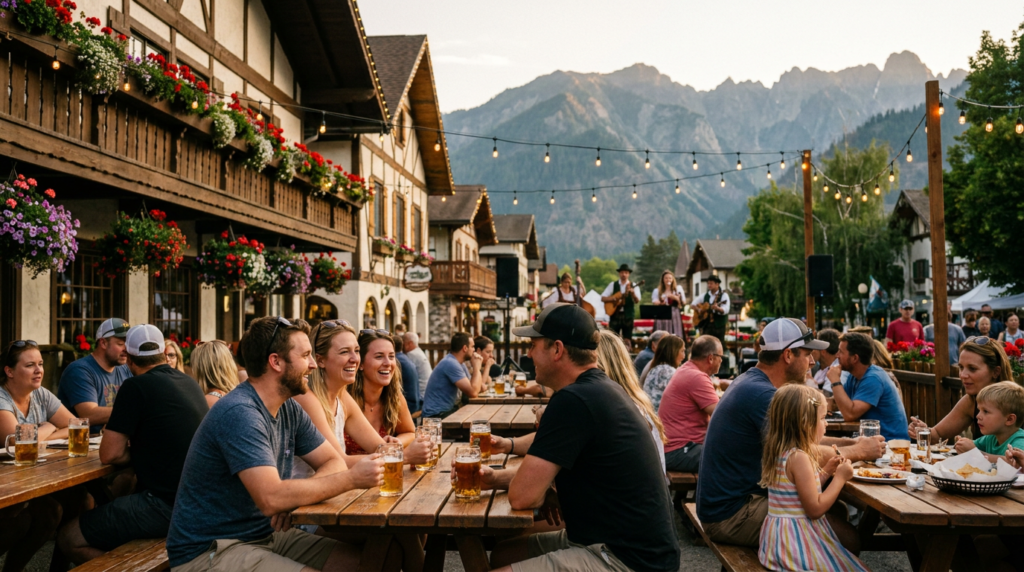
Nestled in the Cascade Mountains, this former logging town reinvented itself as a Bavarian village—halfway between Munich and the Pacific Northwest. Timber-framed buildings, painted shutters, and flower boxes line the streets, while the surrounding peaks provide a dramatic alpine backdrop.

In January, snow settles gently on rooftops and pine boughs, transforming the entire town into a living ornament. Horse-drawn carriages clip-clop down Front Street, bakeries smell like fresh strudel, and every storefront looks camera-ready.

Leavenworth doesn’t just look festive—it commits. Seasonal festivals, traditional music, and warm beer halls make it feel immersive rather than kitschy.

Snow Globe Moment: Evening snowfall + glowing alpine lights = instant magic.


Stowe — Vermont

Classic New England Winter, Perfected

https://scene7.vailresorts.com/is/image/vailresorts/20220208_ST_FisherUnlimited_607%3AProduct-Cards-Landing?dpr=on%2C2.625&fit=constrain%2C1&h=668&resMode=sharp2&w=1002&wid=382

If you’ve ever pictured a New England winter scene—white church steeple, covered bridges, winding roads through snow-laden trees—you were probably picturing Stowe.

This Vermont town balances elegance and ease. It’s a ski destination, yes, but also a place where maple syrup, old inns, and quiet mornings matter just as much as powder days.

January in Stowe is peaceful. The crowds thin, the snow deepens, and the town exhales. Main Street glows softly at night, while Mount Mansfield looms like a painted backdrop.

Snow Globe Moment: A dusting of snow on the village green at dawn, before the town fully wakes up.

» Read more

January by the Sea: Coastal Destinations That Feel Surprisingly Peaceful

January has a reputation problem. For many travelers, it’s seen as the month of recovery—recovering from holiday spending, cold weather, and the emotional whiplash of going from celebration back to routine. But along America’s coastlines, January tells a very different story.

This is when the sea exhales.

Crowds thin out. The air sharpens just enough to feel refreshing. Sunrises arrive quietly, uninterrupted by packed boardwalks or overbooked hotels. Coastal towns shift back into their natural rhythms, revealing a version of themselves summer visitors rarely get to see.

Traveling by the sea in January isn’t about swimming weather or beach parties. It’s about space, calm, and connection—to the water, the town, and yourself. If you’ve ever wanted to experience America’s coasts without the noise, January may be your perfect month.

“The ocean doesn’t disappear in winter—it just becomes more honest.”


Why January Is the Coast’s Best-Kept Secret

In peak season, coastal destinations perform. In January, they breathe.

Restaurants are still open but unhurried. Locals linger instead of rushing. Nature takes center stage—rolling surf, seabirds, shifting light, and long shoreline walks that feel almost meditative.

You’ll also notice:

  • Lower hotel rates and more flexible bookings
  • Easier access to waterfront dining and attractions
  • A sense that you’re seeing the real version of the place

For travelers who value mood over mayhem, January by the sea is quietly unbeatable.


🌊 Cannon Beach, Oregon: Moody, Majestic, Meditative

https://smile4travel.de/wp-content/uploads/2020/01/USA_OregonCoast_CapeSebastian-7.jpg

Winter transforms the Cannon Beach experience into something cinematic and deeply calming. Storm-washed skies, dramatic waves, and the iconic Haystack Rock rising from misty sands make January feel like nature’s private showing.

This is the season for long beach walks in layered jackets, cozy coffee shops, and watching the ocean change moods by the hour. Whale sightings are common, and sunsets—when they break through—feel hard-earned and unforgettable.

January vibe: reflective, artistic, soul-clearing
Perfect for: photographers, writers, couples seeking quiet


🌴 Sanibel Island, Florida: Soft Sun & Empty Shorelines

https://images.openai.com/static-rsc-3/tnnHbO8Ci8rXDJyiJULBvnbNmfpkX8FBl4kXyD3j6YjIctYn7cX4knQ461nYMg1Iq6XlA8zrFaWDjindcyn2dxK59g6C6hGtPFVStVFwt5g?purpose=fullsize
On the opposite end of the spectrum, Sanibel Island offers warmth without the frenzy. January brings sunny days in the 60s and 70s, gentle breezes, and some of the quietest beaches of the year.

Shelling becomes a mindful ritual instead of a competitive sport. Bike paths are peaceful. Sunsets unfold slowly, uninterrupted by packed crowds.

It’s not sleepy—it’s serene.

“Peace isn’t the absence of sound. Sometimes it’s just fewer voices.”

January highlights

  • Peak shelling season
  • Outdoor dining without humidity
  • Calm Gulf waters perfect for kayaking

🌾 Cape Cod, Massachusetts: Winter Simplicity by the Sea

https://images.openai.com/static-rsc-3/7gdfhFh-CRYgZ2ywn7cZrvYuv2QxyhhDqOrsKD85Xsj93hSOzV_-axsaJ-9kAbiOHPnSia9mG8lJ5MPE-JzNVaDwPcHitfwGtwK0m9Msjk0?purpose=medium

Summer defines Cape Cod, but January reveals its soul.

The beaches are wide and empty. The villages feel authentic again—locals chatting, lights glowing in shop windows, and fishing boats rocking gently in quiet harbors. Snow occasionally dusts the dunes, creating stark, beautiful contrasts between land and sea.

You won’t come for nightlife. You’ll come for clarity.

Best experiences

  • Lighthouse walks without crowds
  • Fireside seafood dinners
  • Beachcombing with only gulls for company

🎺 Gulf Shores & Orange Beach, Alabama: Calm on the Gulf

https://images.openai.com/static-rsc-3/dsZ1pjtAZhf7ZKlp4ENgcY_YHcIAU5UVC5OoE-7OU4MBj6dH0HhDeuyWxSNSx_DcydHlfS4dkshCT6jbUXhZznjJ1iyeorYw5Up2fa1-gGA?purpose=fullsize
Often overlooked, Gulf Shores and Orange Beach shine in January.

The sugar-white sand looks even brighter under winter sun, and the beaches stretch wide and nearly empty. Temperatures hover in the 60s, perfect for shoreline walks, seafood feasts, and dolphin cruises without the chaos.

This is the Gulf Coast at its most approachable and unpretentious.

Why it works

  • Excellent off-season condo deals
  • Fresh seafood without long waits
  • Mild weather for outdoor exploring

🌉 Mendocino, California: Pacific Drama Meets Quiet Luxury

https://drupal-prod.visitcalifornia.com/sites/default/files/styles/fluid_1920/public/vc_highway1scenicstops_st_rf_516792_1280x640_0.jpg.webp?itok=srR88_XI
January in Mendocino is all about atmosphere. Fog drifts through cypress trees, waves crash against cliffs, and the Pacific puts on a show that feels both powerful and grounding.

This is prime whale-watching season, and the town’s inns and restaurants lean into winter comfort—fireplaces, slow meals, and ocean views meant to be savored.

Ideal for

  • Romantic escapes
  • Nature lovers
  • Travelers who appreciate quiet luxury

🐚 Tybee Island, Georgia: Small, Salty, and Unrushed

https://media.11alive.com/assets/WXIA/images/df1a637b-0ba7-48a3-85d3-668e7316213b/20250122T194611/df1a637b-0ba7-48a3-85d3-668e7316213b_750x422.jpg

Just outside Savannah, Tybee Island becomes wonderfully understated in January.

The lighthouse stands tall against clear skies, fishermen dot the pier, and beach walks stretch uninterrupted. It’s casual, coastal, and comfortable—like visiting a friend who doesn’t feel the need to impress you.

Pair it with a Savannah stay, and you have the perfect balance of history and horizon.


📊 Coastal January Travel Snapshot (Statement Graphic)

January by the Sea Means:

  • ✔ Fewer crowds
  • ✔ Lower lodging rates
  • ✔ Better access to local experiences
  • ✔ More meaningful time outdoors

Water Temperature: Cool
Soul Temperature: Warm


How to Travel the Coast in January (Like a Pro)

A few simple mindset shifts make January coastal travel magical:

  • Pack layers, not expectations – Weather changes quickly, and that’s part of the charm
  • Embrace slow mornings – Coffee tastes better when there’s nowhere to rush
  • Talk to locals – January is when stories flow

This is the month for travelers who enjoy being somewhere, not just checking boxes.


Final Thoughts: The Ocean, Uninterrupted

January strips coastal destinations down to their essentials. No noise. No rush. Just water, wind, light, and time.

Whether you’re walking a foggy Pacific beach, sipping sweet tea by the Gulf, or watching waves roll in under a pale New England sky, one thing becomes clear:

The sea doesn’t need crowds to be powerful. Sometimes it just needs quiet.

If you’ve been craving a reset, a pause, or simply a trip that feels personal again—January by the sea is waiting.

TRAVEL USA LIFE

Where the South Shines in January: Mild-Weather Escapes Worth the Trip

January doesn’t have to mean gray skies, icy sidewalks, and counting the days until spring.

While much of the country hunkers down under layers of coats and weather warnings, the American South quietly shines—offering blue skies, lighter crowds, comfortable temperatures, and a slower, more soulful pace of travel.

This is the season when the South feels like a well-kept secret. Beaches are peaceful, historic streets are uncrowded, and nature shows off without the oppressive heat of summer. You can sip sweet tea outdoors, stroll moss-draped avenues, and explore coastal towns without fighting the crowds or sweating through your clothes.

January travel in the South isn’t about flashy peak-season experiences. It’s about authentic moments—locals who have time to talk, restaurants that feel personal, and landscapes that invite you to linger. If you’re craving sunshine, culture, and warmth without the price tag or pressure, these Southern destinations are worth every mile.

“Travel isn’t always about escaping winter—it’s about rediscovering comfort.”


🌴 Florida’s Gulf Coast: Sunshine Without the Chaos

https://images.squarespace-cdn.com/content/v1/6245a13cea86e81e72d8e810/bb6bd6a7-3ea6-4e2f-af74-a5f4cc3ccd67/st-pete-beach-visitors-guide-header.jpg

The Florida Gulf Coast is a January dream come true. With daytime highs hovering in the upper 60s to mid-70s, it’s warm enough for beach walks and outdoor dining—without the humidity that defines summer.

Sanibel Island is particularly magical this time of year. Seashell hunting becomes meditative, bike paths are uncrowded, and sunsets feel like private performances. Over in Naples, winter brings a refined calm—perfect for golf, upscale shopping, and alfresco meals overlooking the water.

Meanwhile, St. Petersburg blends culture and coastline with its art museums, walkable downtown, and waterfront parks. January is also prime time for festivals and outdoor markets, minus the summer heat.

Why January Works Here

  • Ideal weather for walking, biking, and kayaking
  • Lower hotel rates than peak winter holidays
  • Wildlife sightings peak as migratory birds arrive

🌿 Savannah, Georgia: Slow Streets & Southern Soul

https://savannahfirsttimer.com/wp-content/uploads/2025/01/ETS_Winter-in-Savannah_Snow_157A9830_1200x800_TNY-1024x683.jpg
There’s something poetic about Savannah in January. The city exhales after the holidays, revealing its true rhythm. Highs in the 60s make walking tours comfortable, and the city’s iconic squares feel more intimate without the tour groups.

Spanish moss sways gently above cobblestone streets. Cafés linger over conversations. Ghost tours—still popular—feel more atmospheric in the cooler evening air.

Savannah’s food scene shines year-round, but January allows chefs to slow down and get creative. It’s also an ideal month for photography, with softer light and fewer people in your shots.

“Savannah doesn’t rush you—it invites you.”

Don’t Miss

  • Forsyth Park at golden hour
  • River Street strolls without summer crowds
  • Historic home tours without wait times

🏝️ Charleston & the South Carolina Lowcountry: Elegant Winter Warmth

https://www.innatfollybeach.com/wp-content/uploads/folly02.jpg

January in Charleston feels like stepping into a watercolor painting. Pastel homes glow under winter sunlight, horse-drawn carriages clip quietly along historic streets, and the Atlantic breeze feels refreshing instead of harsh.

With average highs in the low 60s, it’s the perfect time to explore The Battery, wander King Street, or take a short drive to Folly Beach for uncrowded shoreline walks.

The Lowcountry’s marshlands are especially striking in winter—golden grasses, glassy waters, and migrating birds create postcard-worthy scenery.

January Perks

  • Easier reservations at top restaurants
  • Prime season for historic tours
  • Peaceful beaches perfect for reflection

» Read more

Cold Weather, Warm Welcomes: America’s Friendliest Winter Towns

Winter has a way of revealing character. When temperatures drop and daylight shortens, places either retreat inward—or step up with warmth, charm, and hospitality. Across the United States, some towns don’t just endure winter; they embrace it, turning cold months into seasons of connection, comfort, and community.

Traveling in winter strips destinations down to their essentials. There are fewer crowds, quieter streets, and more opportunities to experience places as locals do. And in the friendliest winter towns, that quieter pace opens the door to genuine conversation, shared traditions, and a feeling that you’re not just visiting—you’re welcome.

These are the places where shop owners linger a little longer, where cafés feel like living rooms, and where strangers still make eye contact and say hello. Winter doesn’t push people apart here—it pulls them together.

“Cold weather doesn’t make a town unfriendly. It reveals how warm it really is.”

From snow-dusted mountain villages to cozy Midwestern main streets, these towns prove that some of America’s warmest welcomes arrive when the air is coldest.

Why Winter Is the Best Season to Feel a Place

Summer travel often dazzles. Winter travel connects.

Without festival overload or packed itineraries, winter towns slow down—and invite you to do the same. You notice details. You have time. Conversations unfold naturally. And because winter travelers tend to come for experience rather than spectacle, locals often respond with extra warmth.

It’s also the season when traditions shine brightest: tree-lightings, winter markets, community suppers, storytelling nights, and snow-day rituals passed down for generations.

These towns don’t just tolerate visitors in winter. They welcome them in.


Leavenworth — Alpine Charm, All-In Hospitality

Leavenworth doesn’t do winter halfway. This Bavarian-style mountain town fully transforms into a snow-globe village, complete with glowing lights, alpine architecture, and a community-wide embrace of the season.

But what makes Leavenworth special isn’t just how it looks—it’s how it feels. Locals greet visitors like expected guests. Restaurants are warm and conversational. Shopkeepers share recommendations without rushing.

Winter festivals, sleigh rides, and cozy lodges create an atmosphere where strangers become companions by the fire.

https://bestofthenorthwest.com/wp-content/uploads/2017/12/Leavenworth-snow.jpg

» Read more

1 2 3 11